
Introduction: Solving the Production Bottleneck
Architecture firms, real estate developers, and property marketing agencies hit the same wall when client demand rises: a launch campaign, a tender submission, or a sales gallery deadline arrives faster than the internal team can produce renders for it. Building that capacity in-house means recruiting specialists in modeling, lighting, and material accuracy, which adds cost and lead time right when speed matters most.
White-label architectural visualization removes that constraint. It gives your team an invisible production partner that scales output on demand and slots into your existing workflow without disrupting a single client relationship.
What Is White-Label Architectural Visualization?
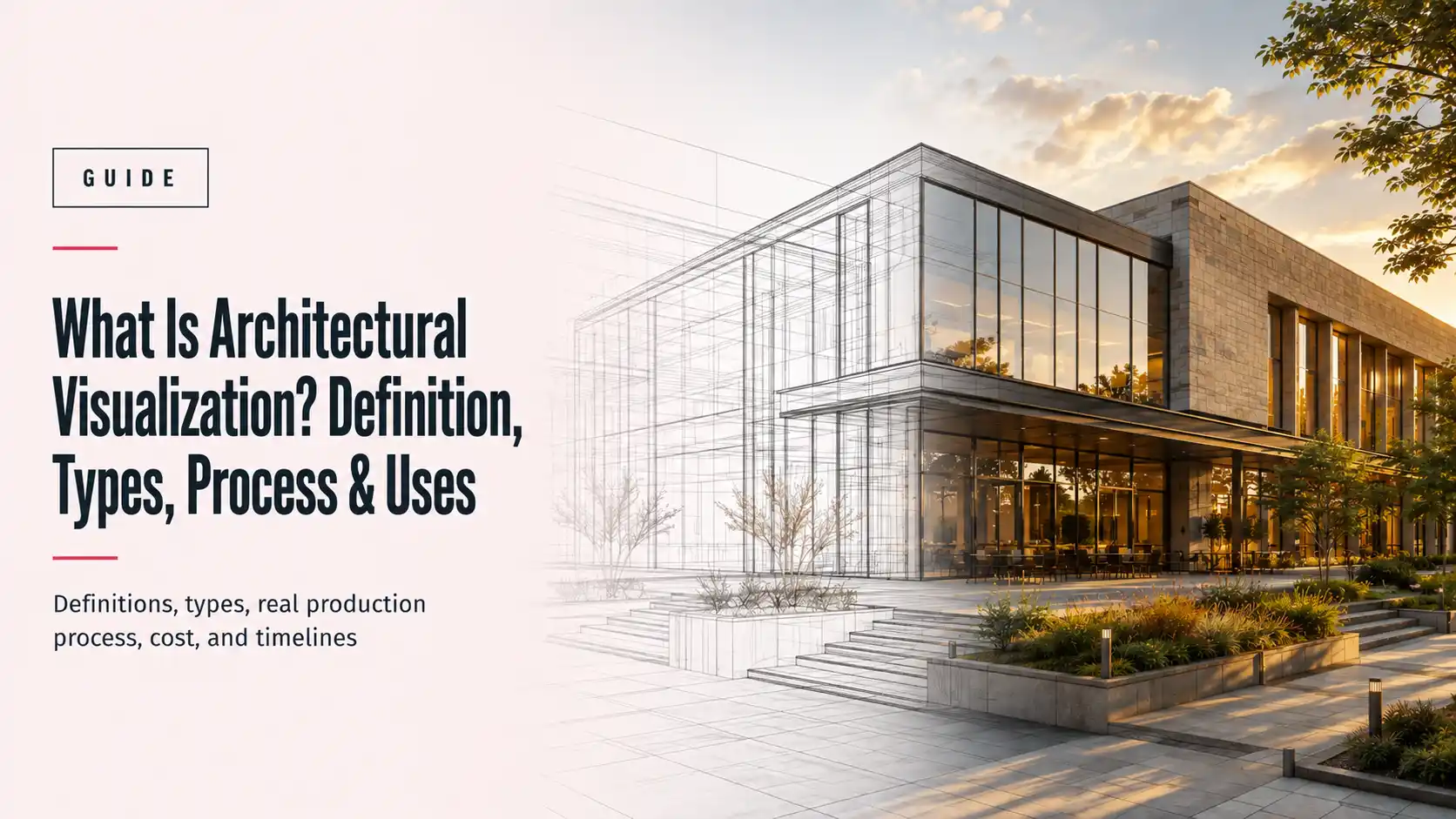
White-label architectural visualization is a B2B production service where a specialized studio creates exterior renders, interior renders, animations, and marketing CGI on behalf of an architecture firm, developer, or agency, under a non-disclosure agreement.
The studio handles production start to finish and delivers files ready for presentations, campaigns, and submissions, while the client retains full ownership, branding, and credit for the work. This lets a business scale rendering output without adding headcount, keeping the team focused on design, sales, and client relationships instead of production logistics.
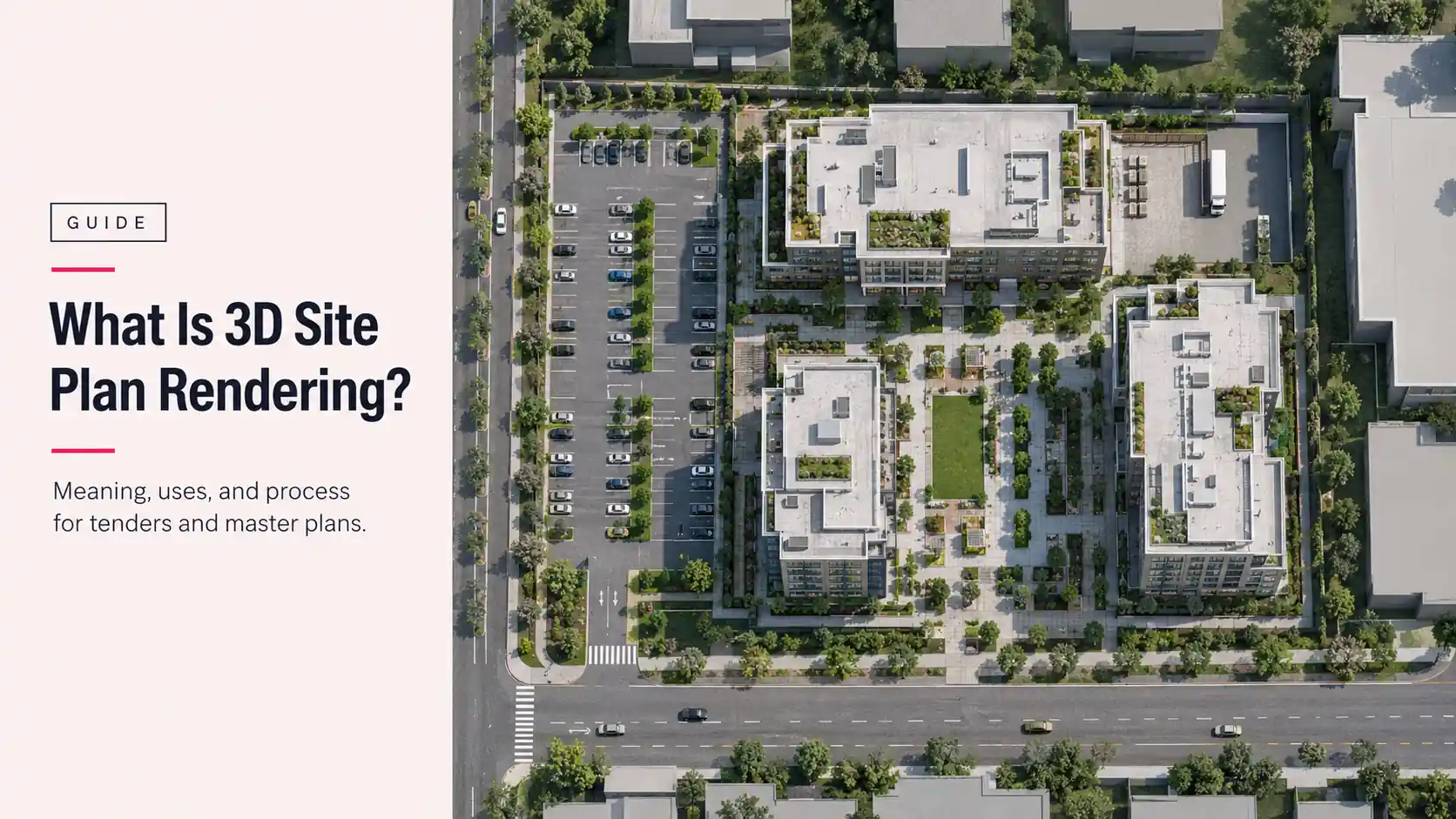
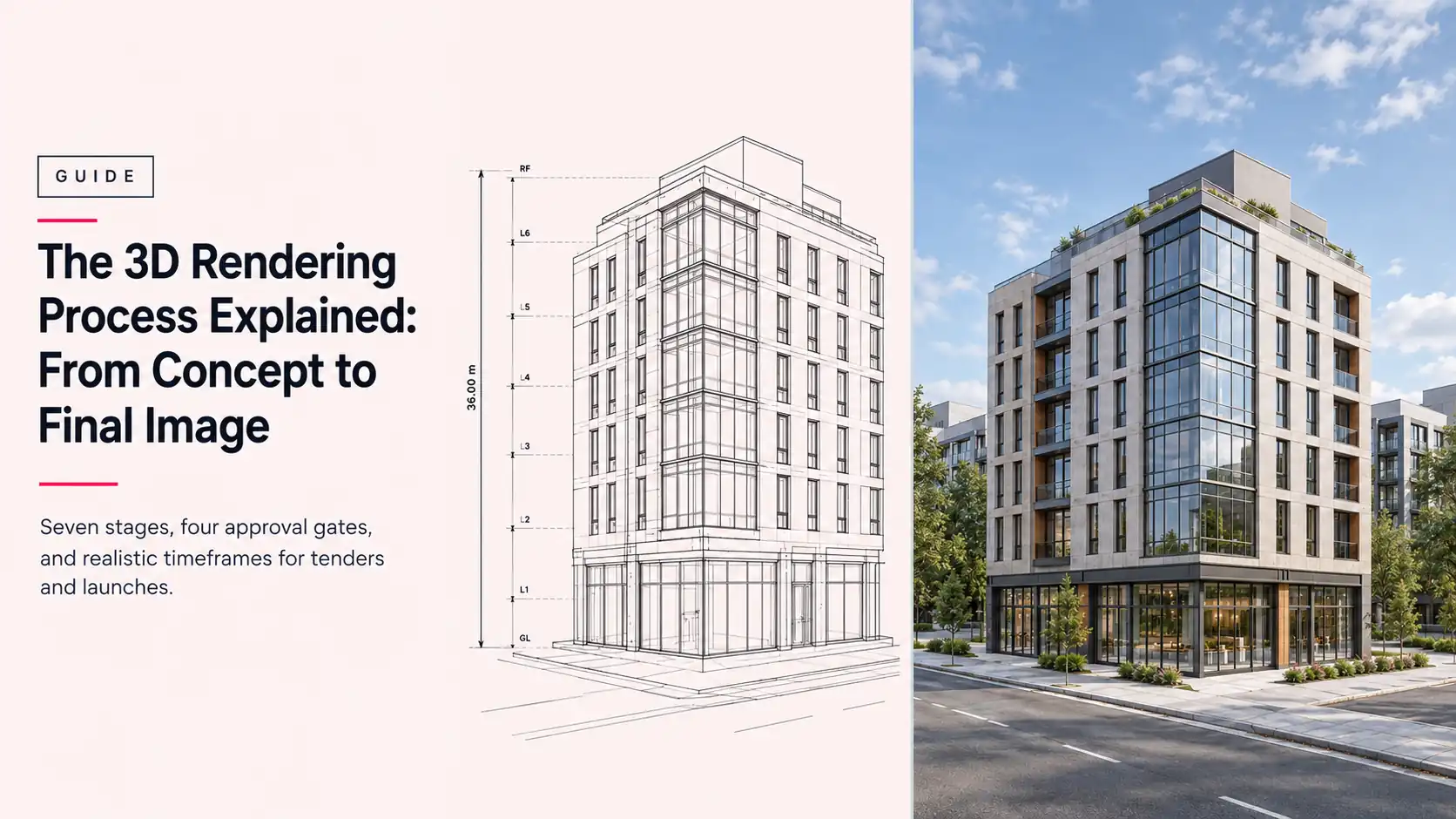
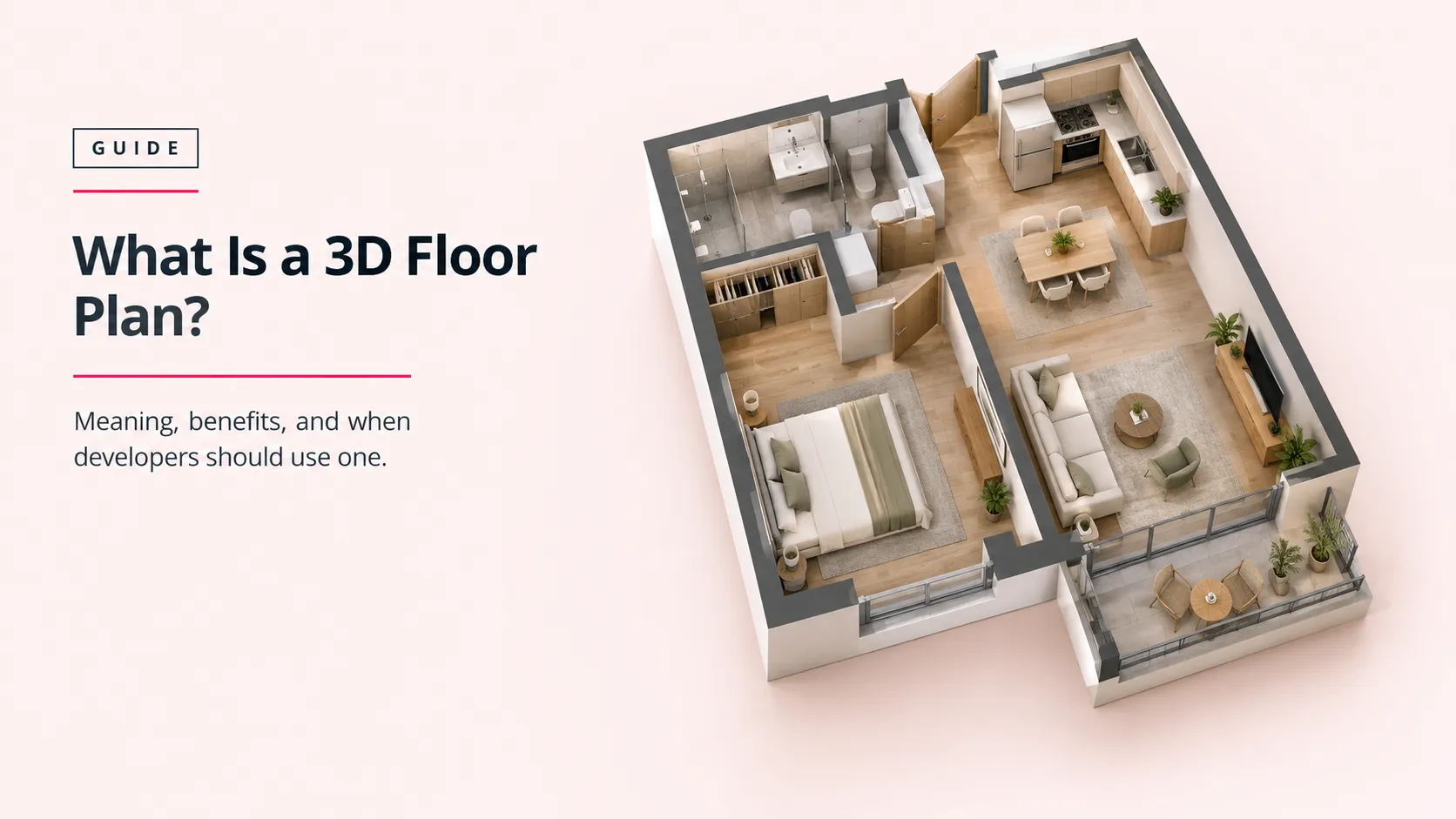
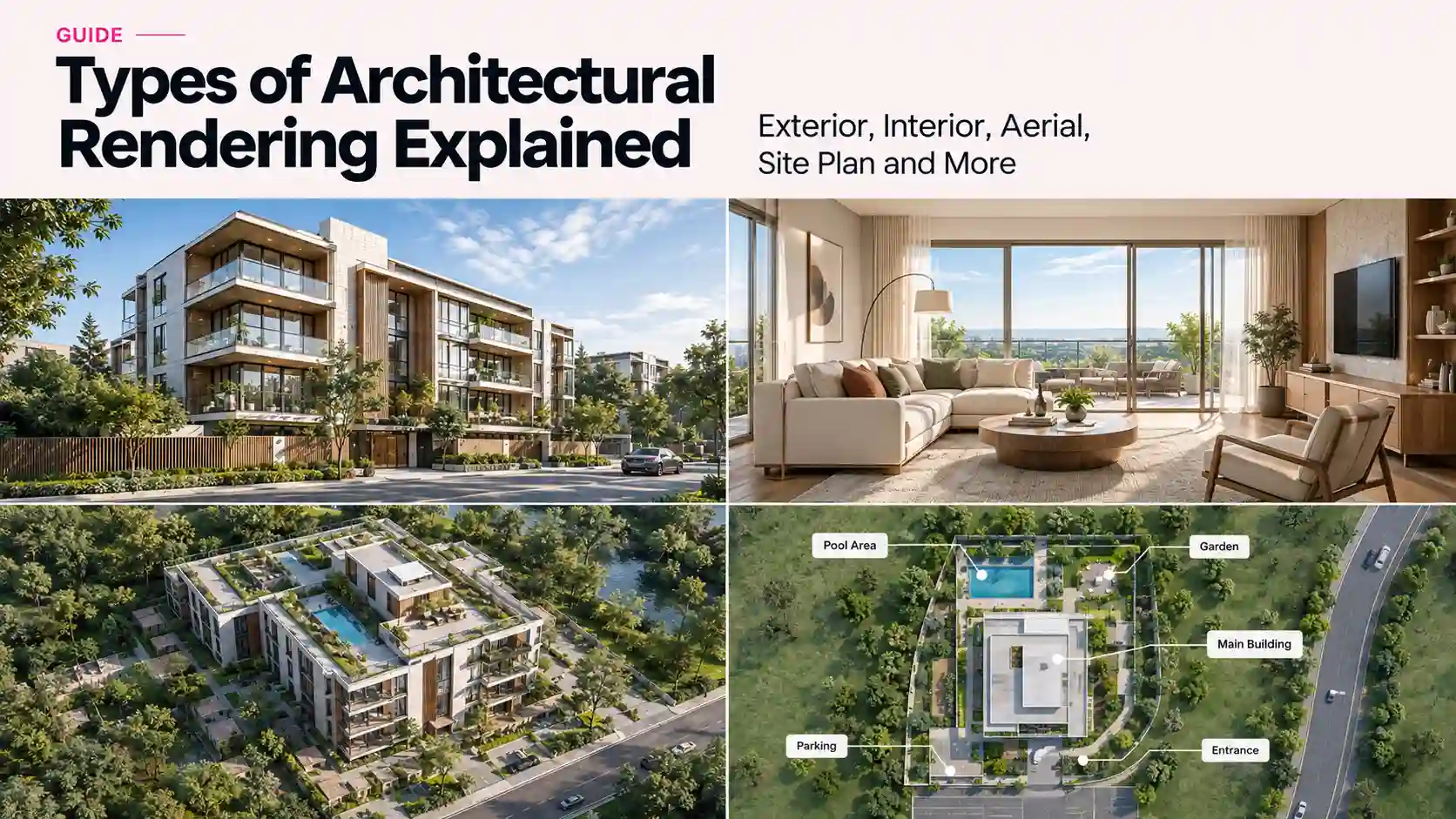
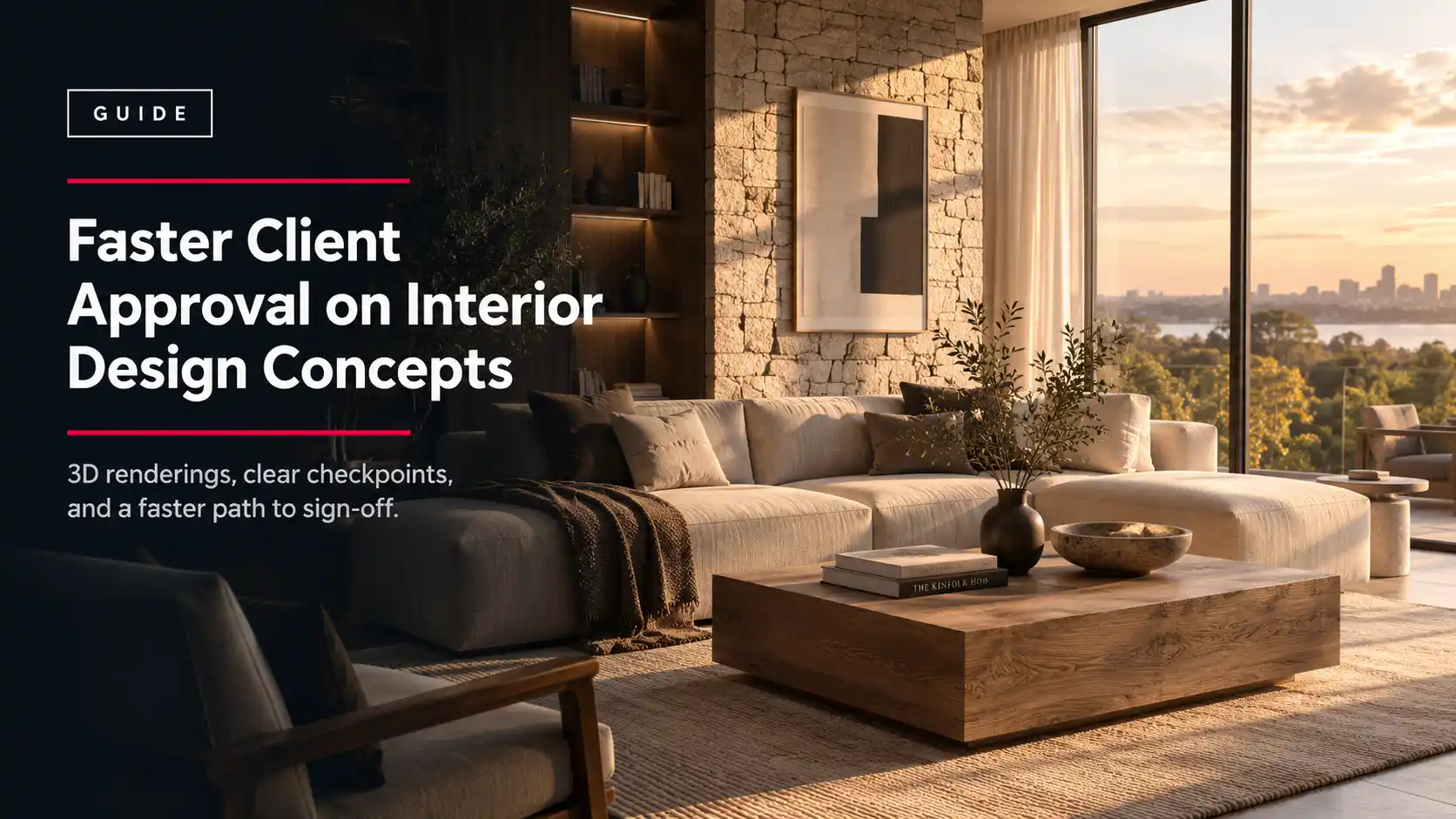
The model covers far more than a single render. It spans exterior rendering and interior rendering, architectural modeling and animation, 3D floor plans, aerial views, 360 panoramas and virtual tours, virtual staging, and property CGI and photomontage.
For a property marketing agency running campaigns across several developer accounts, or a developer preparing a sales gallery ahead of launch, white-label production means every render meets the technical requirements of the project, matched camera angles, accurate lighting, correct material finishes, without the client ever seeing the outsourcing behind it.
A production partner like Archvizly works inside your existing file conventions and delivery formats, so output is ready to drop straight into a presentation deck, a print campaign, or a web gallery.
Why Agencies and Developers Need This: In-House Overhead vs. On-Demand Scaling
Building an in-house visualization team carries real overhead. A single experienced 3D artist runs well into the tens of thousands of dollars a year in salary alone, before software licenses, hardware for render output, and the time spent training someone on your file conventions and brand standards.
That fixed cost stays on the books whether the pipeline is full or empty, and it rarely scales fast enough for a tender deadline or a launch date that was set months in advance.
On-demand production flips that equation. A white-label partner gives you access to trained specialists without the fixed cost, and that capacity expands and contracts with your actual project load.
This matters most when several accounts need renders in the same window, a common reality for property marketing agencies managing multiple developer clients, or when a single large development needs a full package of exterior, interior, aerial, and virtual tour content delivered against one launch date. Production scales with the workload instead of the workload waiting on headcount.
Five Key Benefits of a White-Label Partnership
Lower Production Cost Without Lower Quality
A white-label partner typically cuts production overhead by 40 to 60 percent compared to maintaining an equivalent in-house team, while still delivering renders built to your technical specifications, whether that means a specific camera angle for a tender submission or a lighting mood for a hospitality brand’s marketing campaign.
Costs stay predictable and scale with volume instead of sitting fixed on the payroll.
Capacity That Matches Real Demand
Scale from a handful of renders a month to a full campaign package without a hiring cycle. This is what makes white-label production practical for agencies facing seasonal launch spikes or developers rolling out a project in phases, where consistent quality has to hold across every unit type and every marketing asset.
Technical Expertise Without Building It In-House
A dedicated production partner brings specialists across exterior rendering, interior rendering, architectural animation, aerial views, and 360 virtual tours, each produced to the technical standard a commercial project requires. That expertise is available on demand, without the ramp-up time of training an internal hire.
Brand Protection and Client Retention
Everything is delivered under NDA and branded entirely as the client’s own work. An agency can present every render as proprietary output, protecting the client relationship and removing any risk of the production partnership becoming visible to the end customer.
Faster Turnaround Around Real Deadlines
Renders that would take an internal team days to produce move faster with a dedicated production partner handling the workload, which means campaigns launch on schedule and tender packages go out before the deadline instead of against it.
The Archvizly Production Workflow
Archvizly’s white-label process is built around the deadlines our clients actually work against: tender submissions, launch dates, and sales gallery openings. Here is how a project moves from brief to delivery.
1. Brief and Specs Intake
We review your project brief, including required camera angles, deliverable formats, brand guidelines, and target deadline. This phase aligns the production plan with your project’s technical and visual requirements, typically completed within 24 to 48 hours of receiving the brief.
2. Production Phase
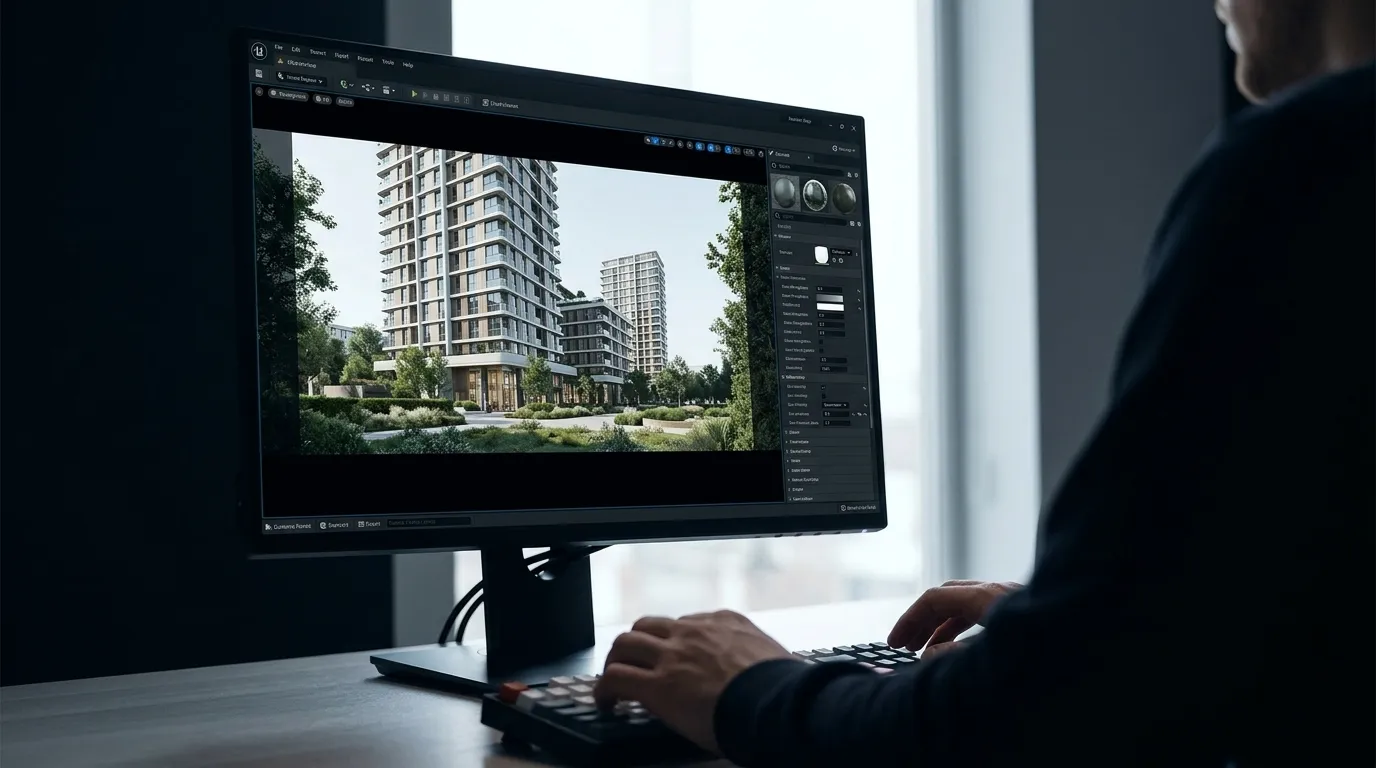
Our team builds and renders the assets using industry-standard modeling and rendering tools, matching lighting, material finishes, and composition to your brief. We iterate on your feedback throughout, so the work integrates directly into your existing review and approval process.
3. Quality Assurance
Every render is checked for lighting consistency, material accuracy, and geometry issues before it reaches you. We verify formats and resolution against the original brief, with revision rounds built in to meet your standard before final sign-off.
4. Delivery and Integration
Final assets are delivered through a secure channel, fully branded as your own work. Post-delivery support covers minor adjustments, so your team can deploy the renders immediately with no visible trace of outsourced production.
Maintaining Confidentiality and Brand Integrity
Confidentiality is not an add-on to white-label architectural visualization, it is the foundation of it. Every engagement runs under NDA, and Archvizly operates as a production partner with no watermarks, no visible credits, and no metadata that would reveal our involvement.
Files arrive ready for your branding, with nothing to strip out or clean up.
This matters most when the work involves sensitive project details, an unreleased floor plan, a pricing structure tied to a launch campaign, or a pitch a firm is preparing for a competitive tender.
Secure delivery workflows protect that information throughout production, so agencies and developers can scale output without adding exposure risk to a client relationship.
Real-World Application: A High-Volume Development Launch
Consider a property marketing agency handling the launch campaign for a real estate developer bringing a residential tower to market. The campaign needs a sales gallery ready in weeks, with renders covering exterior views, interior finishes across several unit types, an aerial view of the site, and a virtual tour for prospective buyers.
The agency’s in-house capacity cannot absorb the volume without pulling resources from other client accounts.
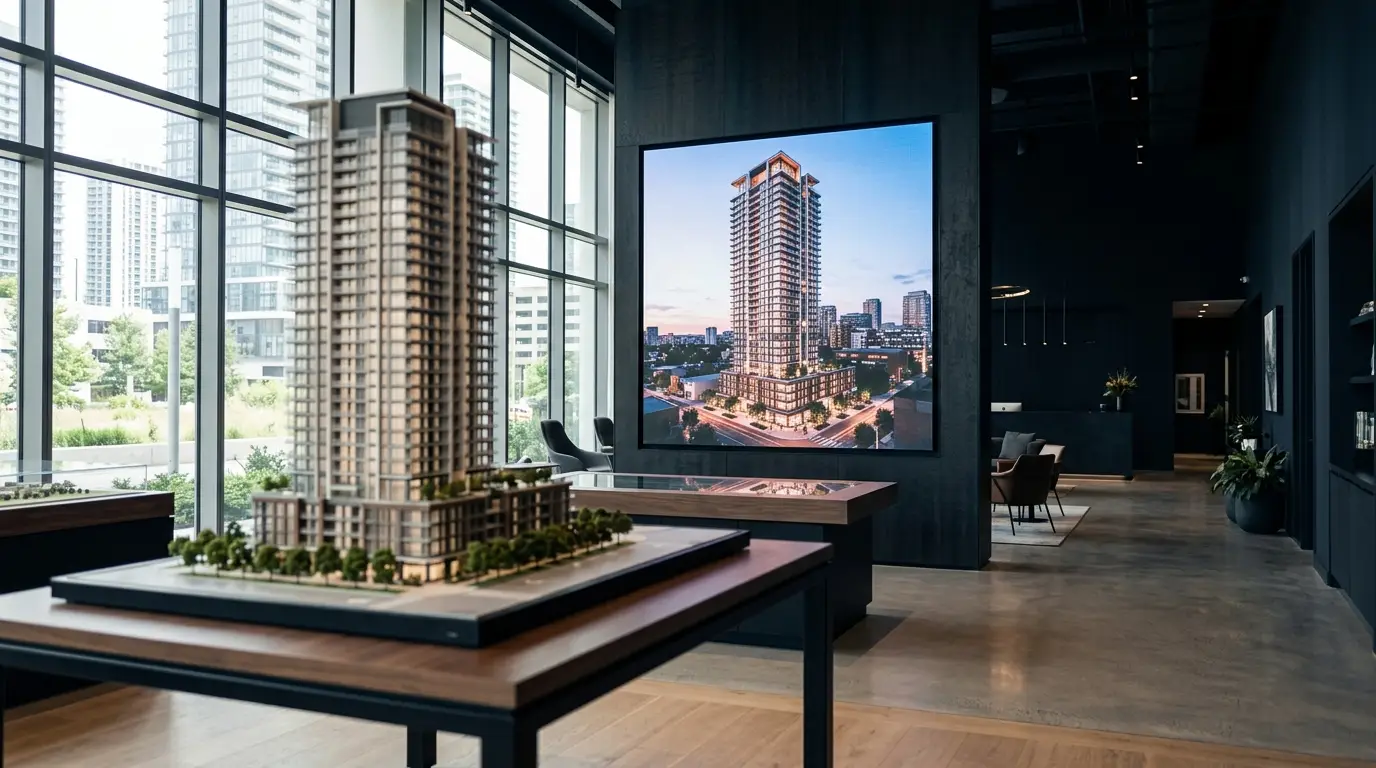
The agency brings in Archvizly as a white-label production partner. Specs are set at intake: exterior renders from three approach angles, interior renders for five unit layouts, one aerial view of the completed development, and a 360 virtual tour for the sales gallery, all matched to the developer’s existing brand guidelines.
Production runs against the campaign timeline, quality assurance confirms lighting and material accuracy across every asset, and delivery happens under NDA with the finished work branded entirely as the agency’s own.
The result: the sales gallery opens on schedule, the developer has a consistent visual package across every touchpoint, and the agency delivers the account without adding headcount.
This is the production model agencies rely on when several client campaigns compete for the same internal bandwidth. See more finished work in our case studies.
Frequently Asked Questions
What is the difference between white-label architectural visualization and standard outsourcing?
White-label production is built around anonymity. Every deliverable is covered by an NDA and arrives branded entirely as the client’s work, with no visible credit to the production partner. Standard outsourcing arrangements often involve visible attribution, which can dilute the client relationship an agency or developer has built.
How does Archvizly handle project specs like camera angles and file formats?
We build every project around your brief. Camera angles, resolution, file formats, and brand guidelines are confirmed during intake, and production is matched to those specs from the first render through final delivery.
Who typically uses white-label architectural visualization?
Architecture and design firms preparing for competitions and tenders, real estate developers running launch campaigns, interior designers presenting concepts for approval, construction companies submitting bids, hospitality brands marketing properties before opening, and property marketing agencies managing renders across multiple client accounts.
Conclusion and Next Steps
White-label architectural visualization gives creative teams and developers a way to scale production without the overhead of an in-house team, while keeping every render technically accurate and consistent with brand standards.
Archvizly works as your invisible production partner, delivering render-ready visuals that support tenders, launches, and campaigns on your timeline. Schedule a discovery call to discuss your production needs.