
What to Look for in a 3D Rendering Company Before You Outsource (2026)
A first-time client once emailed five rendering companies with the subject line “need a render.” She got five wildly different quotes back, from $300 to $4,000, and no way to tell why. She hadn’t outsourced before; she also hadn’t written a brief.
Before you contact a single rendering company, the highest-leverage work is internal: knowing what to look for in a 3D rendering company, what a reasonable price range looks like, and what separates a reliable studio from a risky one, so you can evaluate five quotes as five answers to the same question instead of five unrelated numbers.
This is the pre-outsourcing checklist. The tactical playbook for the actual vendor conversation, questions to ask, test projects, references, lives in a separate guide linked at the end.
Prepare before you shop, not after.
What should you know about your own project before you contact any rendering company?
Five things, settled internally, before you send a single email.
Scope: are you asking for still images, an animation, a virtual tour, or some combination? Each has a different price and turnaround, and mixing them into one vague request is exactly what produced that first-time client’s five mismatched quotes.
Reference materials: CAD files, drawings, or at minimum clear photos and dimensions. The more a studio has to guess, the higher the quote and the more revision rounds you’ll likely need.
Deadline: a real date, not “as soon as possible.” Rush work costs more everywhere, and studios price accordingly, or quietly deprioritize vague requests behind clients who gave them a firm date.
Budget range: even a rough one. Sharing a range doesn’t weaken your negotiating position; it saves everyone the time of quoting for a scope you were never going to approve.
Approval process: who signs off on the final result internally, and how many rounds of internal review happen before you send feedback to the studio. A single point of contact on your side moves faster than a committee routing feedback through email.
Five answers, settled before the first email, not during it.
What traits separate a reliable 3D rendering company from a risky one?
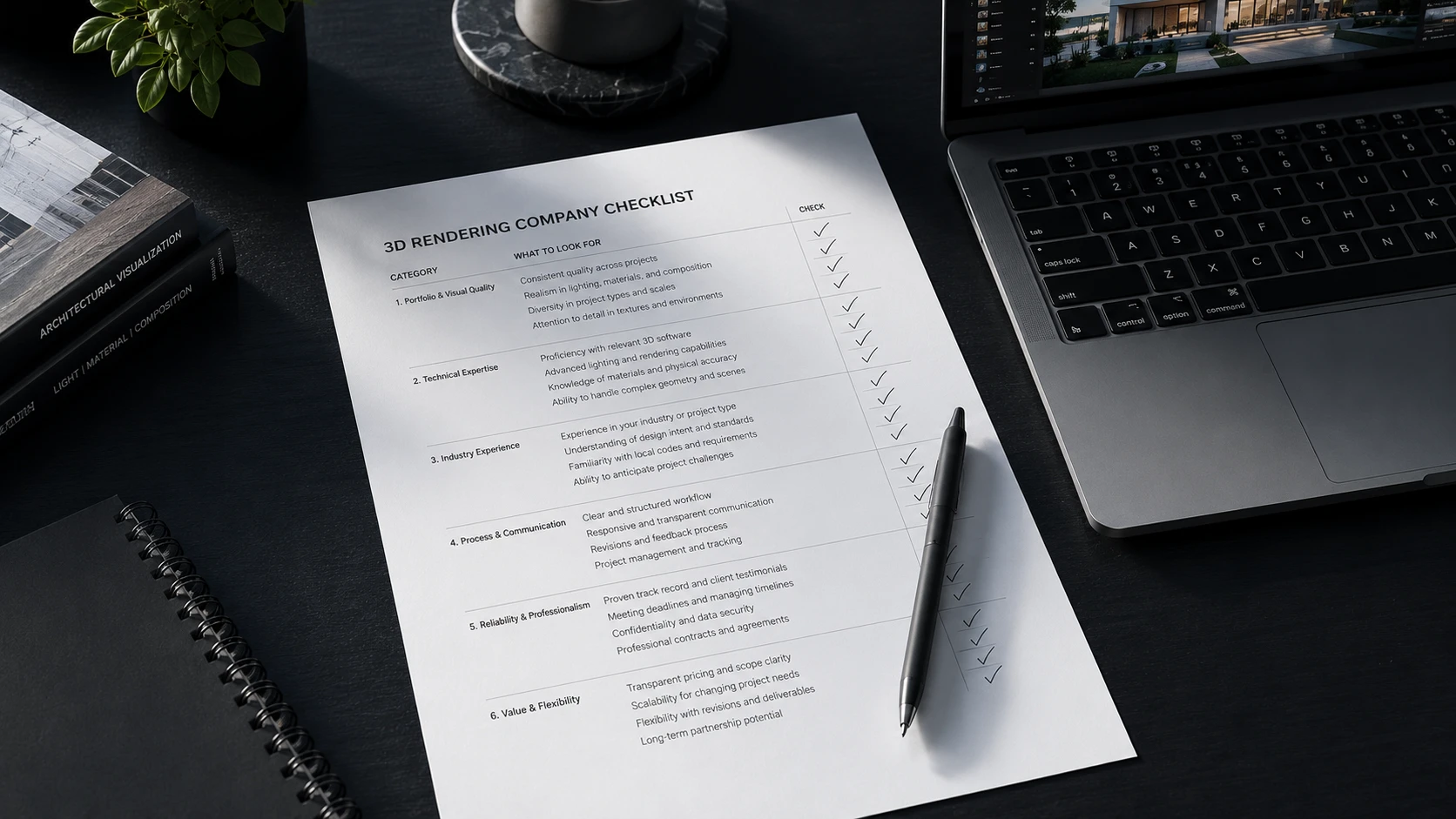
Ten traits worth checking before you commit budget, roughly in the order they tend to surface.
1. A portfolio in your specific project type, not just impressive renders in a different category entirely.
2. A named point of contact, not a general inbox that could route to anyone.
3. A clear, written revision policy before you ask for one.
4. A willingness to quote a small paid test project rather than only large commitments.
5. References from clients you can actually verify, not just testimonial quotes on a website.
6. A specific, dated turnaround commitment tied to a defined scope, not a range.
7. Clarity on file ownership: do you receive source scenes, or only finished renders?
8. An NDA offered proactively, especially for unreleased developments.
9. Transparent pricing, or at least a clear explanation of what drives their pricing, rather than “contact us for a custom quote” with no detail.
10. Evidence of an actual production team, project manager, artists, quality control, not a single freelancer operating under a studio-sounding name.
Ten traits, most of them visible before you ever get a quote.
What information should you include in your first outreach message?
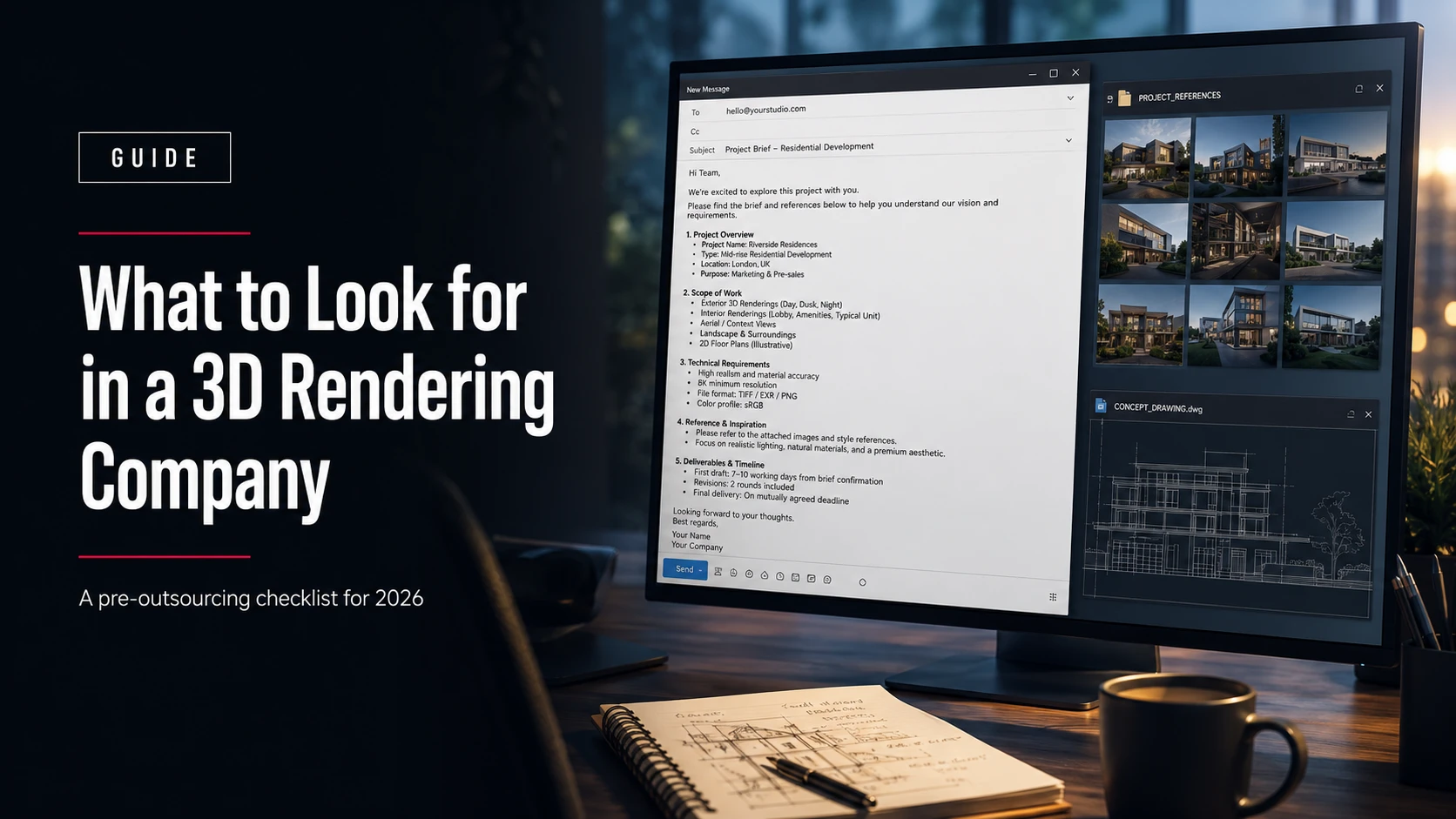
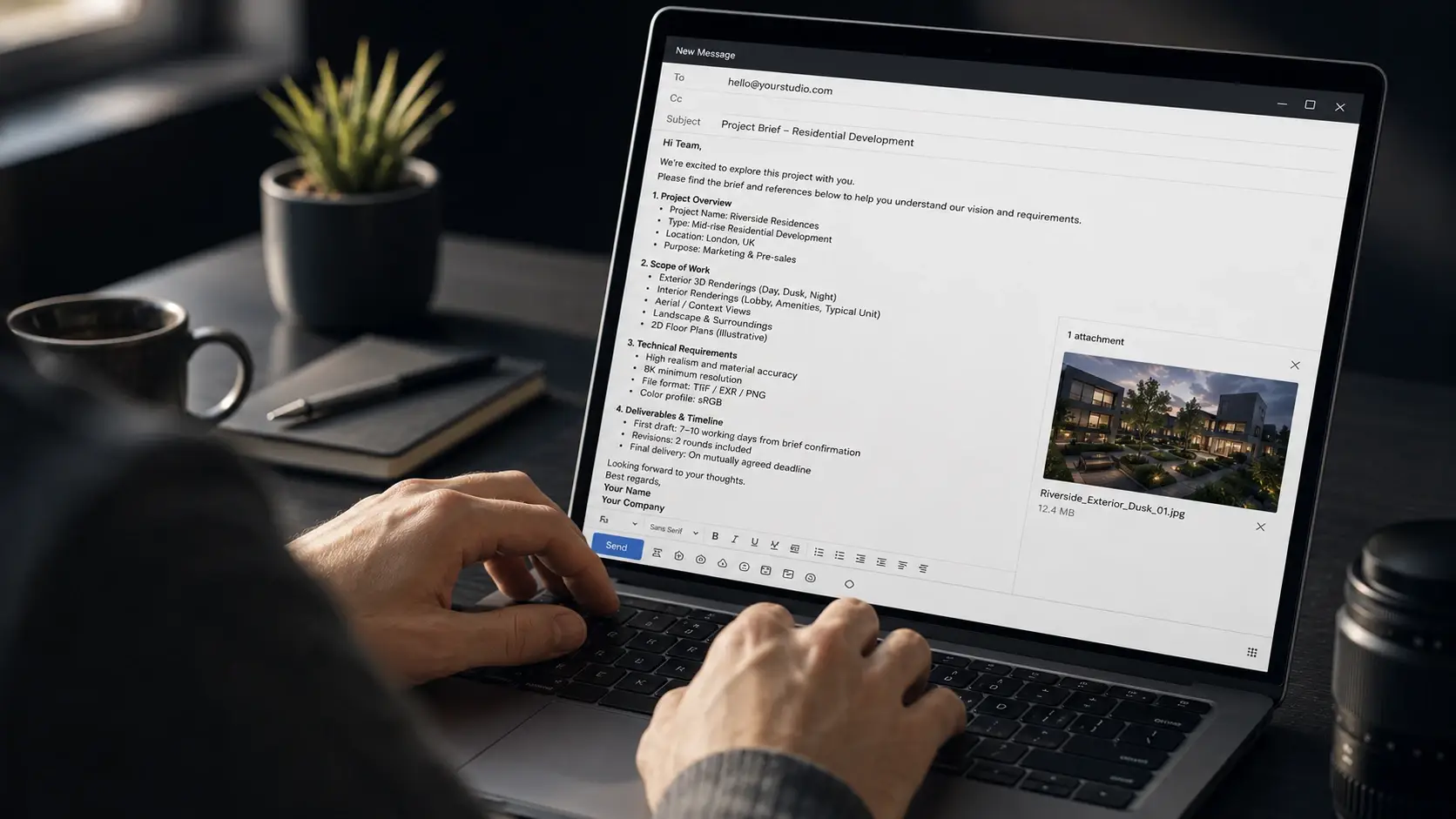
A short, specific brief gets faster, more accurate quotes than a vague one, and it’s the single fastest way to avoid the five-mismatched-quotes problem.
| Include | Example |
| Project type and scope | “One exterior still image of a 4-story residential building, dusk lighting” |
| Reference materials available | “CAD file (DWG) plus 12 site photos attached” |
| Deadline | “Draft needed by August 14, final by August 21” |
| Intended use | “For a planning submission, needs to look accurate, not stylized” |
| Budget range | “Looking to stay under $1,200 for this image” |
That single paragraph does more to get an accurate, comparable quote than a longer email with no structure.
How do you compare quotes from multiple companies fairly?
Normalize scope before comparing price. A $400 quote and a $1,400 quote for “the same render” often aren’t quoting the same thing at all, one might include two revision rounds and source files, the other might include neither.
Ask each company to break down what’s included: number of revisions, file formats delivered, and turnaround time, not just a total price. Once those are equal across quotes, the price comparison actually means something.
Compare scope first. The price comparison only means something after that.
What mistakes do first-time outsourcers make?
Chasing the lowest price without normalizing scope is the most common one, and it’s how that first-time client ended up with a $300 quote that turned out to exclude revisions entirely.
Skipping a written agreement because the conversation felt friendly is the second. A good first call doesn’t replace a written revision policy and a defined deadline; it just makes the eventual written terms easier to negotiate.
And treating the first studio you talk to as the only option, out of a desire to move fast, tends to backfire. Two or three quotes, compared on equal scope, takes one extra day and meaningfully de-risks the decision.
Slow down by one day. Skip the worst outcome.
When are you ready to start vetting specific companies?
Once you’ve settled scope, reference materials, deadline, budget range, and internal approval, and you’ve drafted the short brief above, you’re ready to start actual conversations with studios.
For the questions to ask, the test-project structure, and the red flags to watch for once you’re talking to real candidates, see How to Vet an Architectural Visualization Partner. For the full economics of outsourcing, including real 2026 pricing and provider types, start with How to Choose an Architectural Rendering Company.
FAQ
What should I prepare before contacting a 3D rendering company?
Settle five things internally first: whether you need stills, animation, or a virtual tour; what reference materials you can provide; a real deadline; a rough budget range; and who approves the final result on your side.
What traits should I look for in a reliable rendering company?
A portfolio in your specific project type, a named point of contact, a written revision policy, willingness to run a paid test project, verifiable references, and evidence of a real production team rather than a single freelancer.
Why did I get such different quotes from different rendering companies?
Mismatched quotes almost always trace back to an unclear brief. Different companies assume different scope, revision counts, and file deliverables when a request is vague, so the prices aren’t actually comparable until scope is normalized.
What should I include in my first email to a rendering company?
Project type and scope, what reference materials you have available, your deadline, the intended use of the final image, and a rough budget range. That single paragraph gets faster, more accurate quotes than an open-ended request.
How do I compare quotes from different rendering studios fairly?
Ask each studio to break down what’s included, revisions, file formats, turnaround, before comparing the total price. A cheaper quote that excludes revisions or source files often costs more once those gaps surface mid-project.
Is it normal for a first-time outsourcer to get very different price quotes?
Yes, and it’s usually a sign the brief was too vague rather than that the companies are wildly inconsistent. A specific, scoped brief narrows the range considerably.
Should I ask for a test project before hiring a rendering company?
For your first time working with a new studio, yes. A small paid test project is the clearest way to see real turnaround, communication, and quality before committing to a full project deadline.
What’s the biggest mistake first-time clients make when outsourcing rendering?
Chasing the lowest price without normalizing scope first. A cheap quote that excludes revisions or source files often ends up costing more once those gaps show up mid-project.
Do I need a written agreement even for a small rendering project?
Yes. Even a short project benefits from a written revision policy and a defined deadline, since verbal agreements are the most common source of disputes over scope and timing.
How is this different from vetting a specific rendering company?
This guide covers what to prepare and know before you contact anyone. A separate guide covers the tactical vetting process, questions to ask, test projects, references, once you’re already talking to specific candidates.