


A designer sends a moodboard and a floor plan on a Tuesday. By Friday the client still hasn’t said yes, because they can’t picture the sofa against the wall color, and nobody wants to be the one who approves a room they can’t quite see in their head.
Faster client approval interior design concepts comes from replacing that guesswork with a photorealistic 3D Interior rendering, a defined approval checkpoint, and a single clear recommendation instead of a wall of options. Renderings close the gap between what a designer imagines and what a client can actually see, which is what turns a stalled “let me think about it” into a same-week sign-off.
Not a mood board that hints at a direction, but a specific, lit, furnished room the client can react to in one sitting. That’s the boundary line: mood boards suggest, renderings decide.
The word “faster” here isn’t about rushing the client. It’s about removing the three things that actually slow approval down: an image the client has to interpret instead of react to, feedback that never gets attached to a specific version, and a design conversation that never had a defined finish line.
Fix those three and the same design gets approved in days instead of weeks. That’s the whole mechanism. Everything below is how to build it into a real workflow.
Why Do Client Approvals on Interior Design Concepts Stall?
Most approval delays trace back to one of three causes, and they compound each other. First, the imagination gap: a floor plan and a swatch board ask the client to mentally assemble a finished room, and most people simply can’t do that reliably.
Second, scattered feedback: a comment in a text message, a different comment in an email, a verbal “I think I like it” in a call nobody wrote down. Third, no checkpoint: without a defined moment where a decision becomes final, clients keep quietly reconsidering long after the meeting ends.
None of these are client problems. They’re presentation and process problems, and both are fixable before the next project ever gets briefed.
How do 3D renderings actually speed up client approval?
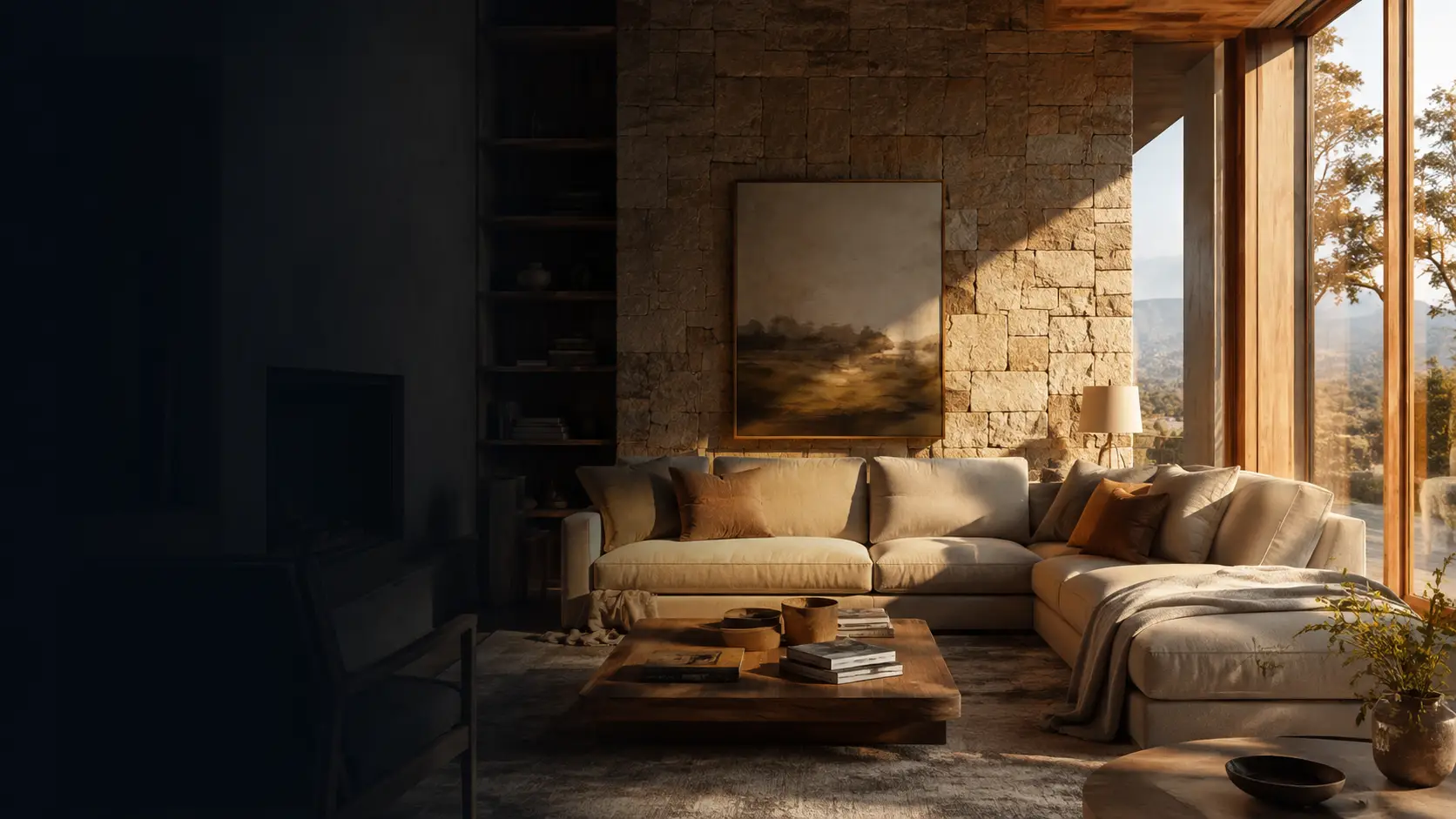
A photorealistic rendering replaces interpretation with recognition. The client isn’t picturing a room anymore, they’re looking at one: the exact sofa, the exact wall tone under the exact lighting, the scale of the coffee table against the rug.
That single shift is what cuts the back-and-forth down, because most revision requests turn out to be the client correcting a picture in their head that never matched what the designer actually meant.
Rendering studios that track this closely have documented the effect directly. Rendimension’s own client data shows private residential projects moving from three to five review rounds down to one or two once photorealistic renderings replaced flat plans and swatches in the presentation.
That’s not a universal guarantee, every project and every client is different, but it matches what shows up across the industry: clarity removes rounds, and removed rounds is the entire point of “faster.”
The catch is that a rendering only speeds things up if it arrives on the timeline the approval conversation needs. A stunning image that takes three weeks to produce just moves the bottleneck, it doesn’t remove it. That’s the piece most guides on this topic skip.
What checkpoints belong in a rendering-ready approval workflow?
Approvals stall without a defined structure, and a rendering doesn’t fix that on its own, it just gives the structure something concrete to attach to. A workable checkpoint sequence for a rendering-driven project looks like this:
- Layout approval. The floor plan and furniture placement are signed off before a single render is produced, so the studio isn’t rendering a layout that’s still in motion.
- Concept direction render. One rendered view establishes the overall style, palette, and mood. This is the moment to confirm direction before committing to every room.
- Material and lighting approval. Finishes, fabrics, and light temperature get confirmed against the render, not against a swatch held under office lighting.
- Full render set sign-off. Every room in the scope gets a final rendered view and a written approval attached to that specific version.
- Post-sign-off change orders. Anything requested after this point is treated as new scope, not a free revision, and priced accordingly.
Skip the layout checkpoint and studios end up rendering a room that gets re-planned two days later. That’s a wasted render, a wasted revision round, and a client who’s now seen two contradictory pictures of their own home.
How long should a rendering actually take, by type?
Turnaround is the number nobody in this conversation states clearly, and it’s the number that decides whether renderings speed up your approval process or just add another wait. Here’s what to expect by render type, and where a white-label production partner changes the math:
| Render type | Typical in-house turnaround | With a white-label production partner |
| Concept direction render (single view) | 3 to 7 days, competing with a designer’s other active projects | 48 to 72 hours per view, produced in parallel with everything else on the calendar |
| Full room, photorealistic | 1 to 2 weeks per room | 48 to 72 hours per view, with multiple rooms produced concurrently |
| Revision on an existing render | Variable, often re-queued behind newer work | Same 48 to 72 hour window, defined revision rounds included per the brief |
| Full presentation set (3 to 6 rooms) | 3 to 6 weeks, sequential | 1 to 2 weeks, produced in parallel across the set |
The in-house numbers aren’t a knock on in-house teams, they reflect a real constraint: one designer or one internal artist can only render one thing at a time, and that queue backs up the moment two clients need presentations the same week. A production partner with dedicated capacity doesn’t have that queue.
Should you render in-house or work with a white-label production partner?
Neither answer is universally correct, it depends on how many projects are moving at once and how tightly your approval calendar is packed. Here’s what each option can and can’t do:
| Approach | What it can do | What it can’t do |
| In-house designer or internal artist | Stay close to the design intent with no handoff; work informally, room by room, as the concept evolves. | Scale to multiple simultaneous projects without one client’s timeline slipping behind another’s; guarantee a stated turnaround per view. |
| White-label production partner | Deliver a stated turnaround per view (48 to 72 hours), run multiple projects in parallel, absorb revision rounds inside a defined pipeline, and stay confidential, the client sees your studio’s name, not the render team’s. | Read design intent that hasn’t been documented in a brief; skip the handoff step entirely. |
Most studios end up using both: internal sketches and quick previews for early direction, then a production partner for the client-facing renders that carry the actual approval decision. The handoff is what determines whether that combination speeds things up or just adds a step, which is exactly what the next section covers.
What should you send your rendering studio to avoid delays?
A vague brief is the single biggest cause of a wasted first draft, and a wasted first draft burns exactly the time a fast approval process can’t spare. Before sending a room to a rendering studio, confirm the brief includes:
- A confirmed floor plan and furniture layout, not one still being revised.
- Reference images for the lighting mood and time of day the client should feel.
- Exact material, finish, and fabric specs, not a general style word like “warm” or “modern.”
- The specific camera angle or angles the presentation actually needs.
- The presentation date, stated up front, not as a follow-up email two days before.
Archvizly’s own 3D Rendering Brief Checklist covers the full version of this list, and it matters even more here: a first draft that’s close to final saves an entire revision round, and that round is often the difference between approval this week and approval next week.
How many design options should you actually show a client?
More options feel generous. In practice, they slow decisions down. A client shown five fully rendered directions doesn’t feel empowered, they feel responsible for a decision they don’t have the expertise to make confidently, and that responsibility is what produces “let me think about it.”
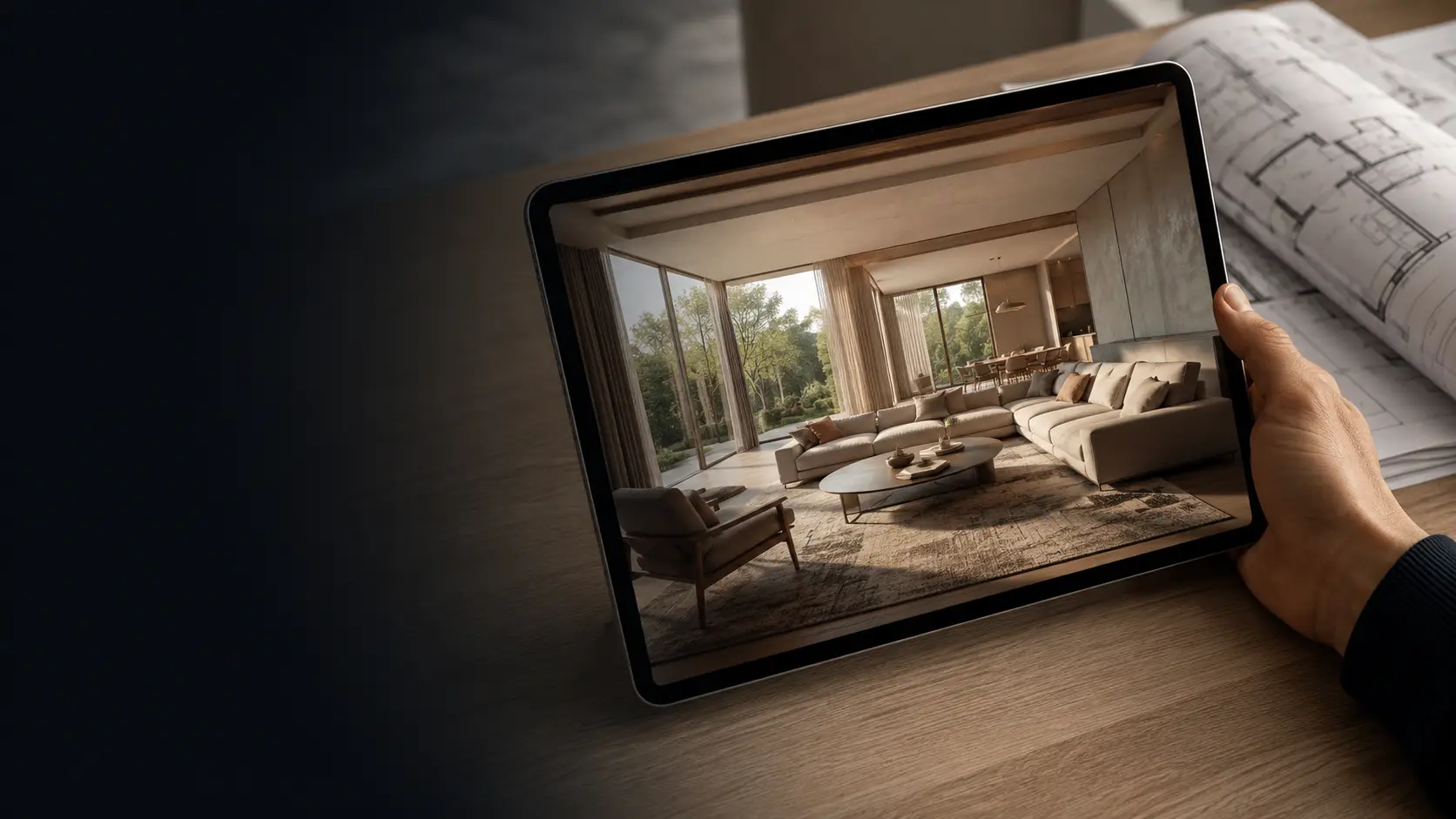
A single, confidently recommended render with a clear rationale gets approved faster than a gallery of alternatives, because it puts the designer’s expertise on record instead of asking the client to design the room themselves. When a genuine choice is needed, two options is usually the ceiling, each rendered fully enough that the comparison is real rather than symbolic. Curate the decision, don’t outsource it.
How do you document and centralize approval sign-off?
A verbal “looks great” in a call is not an approval, it’s a comment that will get relitigated the moment the client sees the finished room and remembers it slightly differently. Every checkpoint from the workflow above needs a written record: the exact rendered version, the date, and the client’s explicit written sign-off attached to that version, not to the project in general.
Keep this in one place the client can find again, not scattered across email threads and text messages. When a change request comes in later, the first question is simple: does this contradict something already signed off, or is it new. That question is unanswerable without a record, and answerable in ten seconds with one.
What are the risks and limitations of using renderings for approval?
Renderings speed up approval, but they can also create a different problem if the image is more polished than the reality it’s promising. A render with dramatic staged lighting and an idealized camera angle can set an expectation the finished room doesn’t quite meet, and that mismatch shows up as a complaint after installation, not before, which is worse.
The fix isn’t less photorealism, it’s accuracy discipline: render the actual specified materials and the actual room dimensions, not an aspirational version of either. A rendering used for approval is a technical production asset representing a real commitment, not a marketing image designed purely to impress. Keep that distinction explicit with the client, and the speed benefit doesn’t come at the cost of trust later.
The other limitation is cost and capacity. Photorealistic renderings take real production time even at a fast turnaround, and a studio that tries to build full in-house capacity for every simultaneous project usually ends up with the queue problem described above. That’s the calculation behind choosing a production partner for the presentation-critical renders while keeping quick internal sketches for early concept work.
FAQ
How do 3D renderings speed up client approval on interior design concepts?
They replace a floor plan and swatch board, which the client has to mentally assemble, with a specific, lit, furnished image the client can react to directly. That removes most of the revision rounds that come from a client correcting a picture in their head that never matched the designer’s intent.
How many revision rounds should an interior rendering project include?
Define the number in the brief before work starts, not after the first draft comes back. Two to three rounds per render is a common baseline, with anything beyond that scoped and priced as new work rather than an open-ended revision.
What’s a reasonable turnaround time for an interior rendering?
A single photorealistic view from a dedicated production partner typically turns around in 48 to 72 hours. In-house teams juggling multiple active projects often take a week or more for the same render, simply because of queue position, not skill.
How many design options should a designer present to a client?
One confidently recommended, fully rendered direction gets approved faster than several partial options. If a genuine choice is needed, two fully rendered alternatives is usually the ceiling before the comparison stops helping and starts stalling the decision.
What should be included in an approval checkpoint for interior design projects?
The specific rendered version being approved, the date, and the client’s written sign-off attached to that exact version, stored in one place both sides can reference later.
Should renderings replace mood boards entirely?
No. Mood boards still do useful early work establishing direction before a layout is finalized. Renderings take over once the layout is locked and the decision moving forward is a concrete, specific one rather than a general style conversation.
When should an interior designer outsource rendering instead of doing it in-house?
When more than one project needs presentation-ready renders in the same window, or when a stated turnaround per view matters more than keeping the work fully internal. A white-label partner scales to parallel projects; a single in-house artist can only render one thing at a time.
What information does a rendering studio need to avoid a wasted first draft?
A confirmed floor plan, reference images for lighting mood, exact material and fabric specs, the specific camera angles needed, and the presentation date, all sent up front rather than clarified after the first draft misses the mark.
Can an overly polished rendering create problems after approval?
Yes. A render with idealized lighting or an aspirational camera angle can set expectations the finished room doesn’t meet. Rendering the actual specified materials and true room dimensions, rather than an idealized version, keeps the speed benefit from costing trust later.
What file formats should a rendering partner deliver for a client presentation?
JPEG or PNG for the presentation itself, EXR for any post-production lighting or color flexibility, and MP4 if a walkthrough or short animated sequence is part of the approval package.
Does a faster approval process mean rushing the client’s decision?
No. It means removing the friction that has nothing to do with the client’s actual decision-making, an unclear image, scattered feedback, and no defined checkpoint, so the time that’s left is spent on the decision itself, not on interpreting a picture or chasing down a comment.
Faster client approval on interior design concepts isn’t about pushing the client. It’s about giving them something specific enough to react to, a checkpoint clear enough to sign off on, and a rendering partner fast enough that the image is ready before the meeting, not after.
Start a project with a production team built around 48 to 72 hour turnaround per view, so more than one client can be approving a concept the same week.